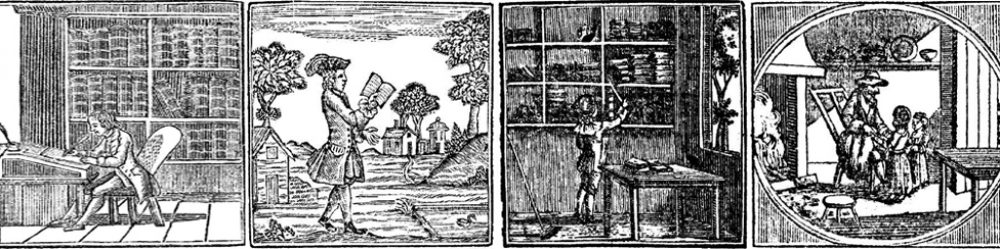
My father used to talk about taking a “busman’s holiday” –that is, doing pretty much the same thing on vacation that he did at work (and no, he wasn’t a busman himself, but rather someone who worked in an office). A great phrase, as I hope you’ll agree!
With that in mind, have you ever wondered what a bibliophile or a librarian who is interested in children’s books does while on vacation? Well, some of us like to look at bookstores and libraries (along with doing other things too, I hasten to add!).
Thus, the recent ALA Annual Conference and Rare Books & Manuscripts “Preconference” in San Francisco and Oakland, respectively, provided a jumping-off point for later sight-seeing — and, in the process, happening upon some amazing small bookshops, run by real book-lovers, by pure serendipity. (For all the great aspects of having the world of books accessible via online shopping, nothing quite compares to just stumbling upon a bookstore or catching a glimpse of an attractive book cover or dust-jacket you’ve never seen before, does it?)
First, there was Village Books, in Ukiah, California, about 100 miles North of San Francisco. We spotted this small shop across the street from our lunchtime retreat from 100+ degree heat. As soon as we entered, I knew we’d found a great bookstore! Even the check-out counter was covered with books, as you can see:

Village Books, Ukiah, California
That introductory “prologue” was certainly borne out by another look around:


Books from floor-to-ceiling, convenient reading spaces throughout… a bibliophile’s delight… mostly used books, but some new ones too.
Of particular interest to me were the sections with children’s (and young adult) books, packed almost to the rafters:


And especially eye-catching was a dedicated children’s reading area, clearly meant to welcome young readers into a comfortable setting and encourage them to sit and read books of all sorts:


But this is a bookstore after all, not a library, so what did we buy?

Upper cover of Tom Brown’s Schooldays, with color-printed paper onlay (Harper & Bros., 1911) author’s collection
To name just a few, some nice French-language children’s books (for a YA reader learning French), a vintage copy of Lord of the Flies (bought by an adult for aforementioned YA reader, since Lord of the Flies seems to have fallen off the assigned list of books for middle schoolers), and a very nicely illustrated 1911 edition of Tom Brown’s School Days, with artwork by Louis Rhead, and a paper onlay on the upper cover that reminds us reminded me just how much work went into late 19th- and early 20th-century publisher’s bindings.
Tom Brown’s School Days (1857) is one of those “children’s classics,” hugely-influential and once widely read, but seldom read by child readers any more. (Actually, a surprising number of “children’s classics” fall into the category of well-known but not much read now.) It’s a landmark example of a “school story,” fiction focusing on children or adolescents within a school context (usually a boarding school), a genre especially popular in England from the mid- to late-1700s through the mid-1940s. Some other prominent examples include: Sarah Fielding’s The Governess (1749) and Kipling’s Stalky & Co. (1899).
Think school stories are utterly passé? Well, think again… J.K. Rowling’s Harry Potter novels drew heavily on the genre — Hogwarts, focal point of the action, is, after all, a school, and most of the main characters are students or masters there — and many critics have discussed how Rowling both made use of and extended the school story genre. Like Tom Brown, Harry Potter comes somewhat timidly to a new school, has to learn the ropes, and undergoes various trials and bullying in the course of making moral choices, learning about himself, and growing up.

As that venerable and learned poet…says

Poor old Benjy!
Although Tom Brown is set in Thomas Arnold’s reform-oriented Rugby School of the 1840s, the story details quite a bit of unruly hijinks by the boys, as well as a lot of fighting and some harrowing bullying — all of which no doubt fascinated boy readers, at whom the book seems clearly aimed. Rhead’s full-page illustrations in this edition compellingly depicted many of these events, and in addition, he provided small historiated letters at the beginning of chapters, which I particularly like. A real window onto another era.


But time to move on… How about continuing our bibliographic travelogue and moving from Northern California to Seattle … and from school stories to Wonderland?
Again, serendipity plays a major role in the story — sometimes you find bookstores where you would least expect to find them, as was the case for us in Seattle. Seattle’s Pike Place Market is famous: the usual tourist souvenirs, fresh fruit and veggies, and lots and lots of fresh fish, including “flying fish,” tossed around by energetic fishmongers! (This fish-tossing is so renowned that it serves as the subject of a movie titled “FISH!,” which is about improving customer service, workplace morale, and motivating workers. If you don’t believe me, do a quick online search!)


A fun place to visit — but hardly a place you’d expect to find a bookstore… But tucked away in a downstairs corridor, around the corner from a cookie shop, a coffee bar, and a take-out food place, we happened to see a brightly-colored bookstore wedged into a space not much more than ten or fifteen feet wide: Lamplight Books.
A glimpse inside the shop…
Lamplight Books, Seattle Market.


Cover of Through the Looking-Glass (Dodge & Co., 1909?) author’s collection
Sightseeing again took a back-seat to book-browsing, as we went through the hidden garden gate or down the rabbit hole into another magical world of books…
Among the books we discovered was a hard-cover second printing of one of Durrell’s Alexandra Quartet novels, well-read but still with its original dust-jacket — and still cheaper than a new paperback edition elsewhere — and an even more well-read 1909 edition of Through the Looking Glass by American publisher Dodge & Co., which interested me for several reasons.
First, the illustrations by Bessie Pease Guttmann present Alice as a dark-haired girl — quite unlike Tenniel’s depiction, but much like Carroll’s own artwork in his original Alice manuscript edition — with the Queen of Hearts as the blondie — and one looking very much like Tenniel’s chess piece depiction in Looking Glass, not a playing card or Queen Victoria parody a la Alice in Wonderland.


But even more arresting were the unique markings and colorings in this copy of the book, presumably made by a child-reader. As we see on the pictorial endpapers, printed in a blue-outlined pattern, an apparently quite young reader has “embellished” things! (I’d say she/he was young, based on the roughness of the coloring.)

Blue-printed patterned endpapers colored by child reader.
And this embellishment continues throughout the book, whose blue-printed outline borders were apparently irresistible to the reader. Sometimes, the child embellisher fully colored the illustrations on an entire page, and sometimes he/she has focused in only on details apparently of particular interest to him or her, as we can see in the instances below:

Instances of selective coloring by child reader
This is pattern of varied “levels” of markings in children’s books is something I’ve observed before and discussed here on the Cotsen blog. Was the reader of this book simply focusing on things of particular interest to her/him, or responding to the story and somehow trying to foreground characters and aspects discussed on particular pages by coloring them in there — in effect providing a reader’s commentary of sorts? Of course, there’s no way to be sure. But since identifying agency by child-readers and making sense of reader-response is certainly a topic of considerable interest to those analyzing child readership today, I wonder if patterns of marking like those found in this book might conceivably shed some light on these areas of inquiry?
This copy of Through the Looking Glass also manifests evidence of another possible sort of reader “appetite” on quite a number of pages, as we can see on the example below:


It’s a little hard to tell what these are? Bite-marks? If so, made by a child? By several different children? By the family dog? Or just marks of rough handling? They certainly look like bite marks to me! And if so, what might this suggest to us about the reader(s) of this book or child readers, in general? Along with the markings, this definitely suggests that this copy of Through the Looking Glass did indeed “find its reader” who extensively handled and “interacted with” the book in several ways, even if we can’t be sure that he/she necessarily read the text on the pages.
I think the signs of book use here also underscore an important aspect of children’s use of books; it’s frequently unpredictable — often spontaneous and unplanned — and thus it can be hard to “interpret” what this “evidence” means, as well as dangerous to read too much into this by adults who are coming along later and trying to investigate child reading. Child readers leave a lot of clues, but how can we be sure that we’re “reading” them accurately from our adult critical vantage-point? There’s always an element of speculation in this critical approach, isn’t there?
Apart from an opportunity to think about children’s marks in books and talk about a couple of interesting editions of children’s “classics,” I guess the broader “moral” of my story here is really to highlight that independent bookstores — and great ones too! — can still be found out there, sometimes when and where you least expect them. There’s real pleasure to be had in browsing them with no particular book or aim in sight, especially if you’re a book-lover. Sometimes you find amazing things that you had no idea you were looking for! There can be real serendipitous pleasure in simple serendipity…
If you can’t pass by a bookstore without walking in, you can read posts by Andrea and Minjie about their adventures in Cape Cod, Los Angeles, Shanghai, and Abu Dhabi…


