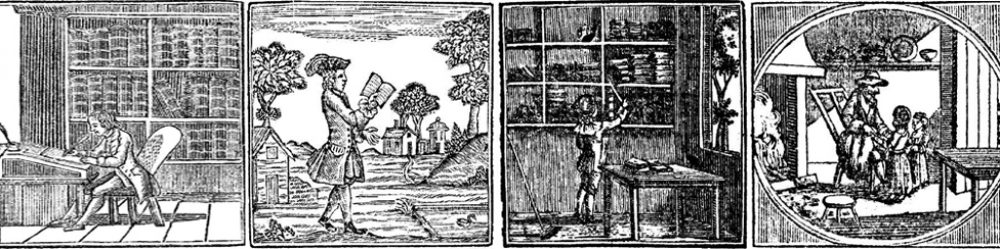

The connection between football and Thanksgiving seems to go way back…
On November 28,1926, Marcus sent his big sister Eleanor a report on Thanksgiving back home. He thought it was “The best Thanksgiving I ever had” even though “I didn’t get enough turkey.” It wasn’t having the dressing, sides, or pies in the cement house that made the holiday so special that year. The real reason?
“I WENT TO THE MOVIES 2 on THANKSGIVING.”
(The “2” is short for “twice.”)
![mfrenchpage[1]](https://i0.wp.com/blogs.princeton.edu/cotsen/wp-content/uploads/sites/88/2015/11/mfrenchpage1.jpg?ssl=1)
[Collection of Thirty Picture Letters Written to his Older Sister Eleanor]. [New York, between 1925 and 1927]. (Cotsen)
 After this stirring yarn, in which Rinty saves a child from a vicious black wolf, it was time for something completely different, the “funny picture.” Marcus doesn’t give the title but does mention that it starred Harold Lloyd. According to Marcus, “the goofiest picture I ever saw.”
 ![mfrenchpage[2]](https://i0.wp.com/blogs.princeton.edu/cotsen/wp-content/uploads/sites/88/2015/11/mfrenchpage2.jpg?ssl=1) Maybe the “funny picture” Marcus saw was the full-length silent, “For Heaven’s Sake,” the only movie Lloyd released that year. This chase sequence is pretty goofy, by all objective standards.
Maybe the “funny picture” Marcus saw was the full-length silent, “For Heaven’s Sake,” the only movie Lloyd released that year. This chase sequence is pretty goofy, by all objective standards.  The family went to supper before heading off to the Rialto (the theater’s façade still exists in New Amsterdam) to take in a vaudeville show and another unidentified “goofy picture.” Marcus had more important things to share with Eleanor than details about his third picture show of the day, like his preliminary Christmas list.
![mfrenchpage[3]](https://i0.wp.com/blogs.princeton.edu/cotsen/wp-content/uploads/sites/88/2015/11/mfrenchpage3.jpg?ssl=1) He promised to send his big sister an updated and expanded list soon instead of asking what SHE might like from Santa. I was able to find pictures of some of the things Marcus coveted. Here’s an advertisement for the major manufacturer of bicycle cyclometers:
He promised to send his big sister an updated and expanded list soon instead of asking what SHE might like from Santa. I was able to find pictures of some of the things Marcus coveted. Here’s an advertisement for the major manufacturer of bicycle cyclometers:

The manufacturer’s jingle for this product line was “It’s nice to know how far you go.”
And this might be pretty close to the basketball and the cover on the list: After some perfunctory chat about the weather, Marcus closed with the Pathe News, this time a seasonal story in two frames, written and illustrated by himself:
 ![mfrenchpage[4]](https://i0.wp.com/blogs.princeton.edu/cotsen/wp-content/uploads/sites/88/2015/11/mfrenchpage4.jpg?ssl=1) Is this graphic depiction of a turkey’s slaughter and consumption a sign that Marcus was a budding sociopath? Probably not. These contemporary Thanksgiving greeting cards send the message that Americans were a whole lot more matter of fact and a whole lot less squeamish than we are when it comes to meat-eating…
Is this graphic depiction of a turkey’s slaughter and consumption a sign that Marcus was a budding sociopath? Probably not. These contemporary Thanksgiving greeting cards send the message that Americans were a whole lot more matter of fact and a whole lot less squeamish than we are when it comes to meat-eating…
Marcus also wrote about his adventures trick-or-treating and his battles with the algebra teacher. Just as amusing is The Flapper’s Magazette by Miss Vivie Wivie…

 So enjoy your Thanksgiving weekend, whether you are finishing off leftovers from the bird or that tasty vegan mushroom gravy…
Holiday greetings from Team Cotsen
Andrea, Dana, Ellen, Ian, Jeff, Marissa, Minjie, Miranda, and Miriam


